
Copyright and design rights can sometimes play an important role even in everyday objects. This is evident from the ruling of The Hague District Court of 2 April 2025 concerning two plastic baskets.
These proceedings centred on the question of whether the blue plastic bicycle basket, specially designed for dogs, resembled the green plastic bicycle basket, thereby infringing design rights and copyright. The court ruled that there had been no infringement. What do you think when you see them?
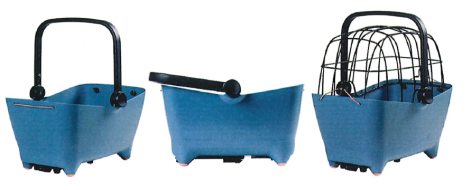
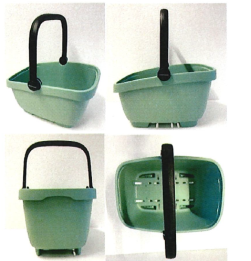
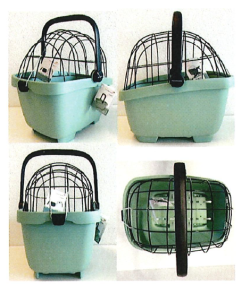
(images taken from the judgment in paragraphs 3.4 and 3.8).
The party that initiated the proceedings (the designer of the blue basket) argued that the plastic basket was specifically designed for transporting a dog on a bicycle. The basket has also been registered as a design. As well as the design being protected by copyright, design rights can also offer protection in this way.
The other party (the seller of the green basket) has argued that there is no infringement of copyright or design rights because the green plastic basket is, first and foremost, a bicycle basket, and with a cushion inside and a cover over it, it can also be used to transport a dog.
The court first examines whether protection exists under design rights and copyright, and if so, whether those rights have been infringed.
Design rights, scope of protection
When it comes to the scope of protection afforded by design rights and whether an infringement has occurred, three elements are considered. Design heritage, the informed user and the overall impression are taken into account, and consideration is given to any design that does not create a different impression on the informed user; furthermore, protection is not limited to designs belonging to a particular sector.
Design heritage refers to the designs that were already on the market before the claimant’s design was launched. In this case, the design heritage consisted of a cat travel basket and shopping baskets. The court ruled that the distinction between the shopping basket sector (the defendant’s green plastic basket) and dog bike baskets (the claimant’s blue plastic basket) was not relevant here to the scope of protection afforded by design rights. Each design is therefore considered individually, not just those belonging to a particular sector.
The informed user is so by virtue of personal experience, or has extensive knowledge of the sector. This is neither the average consumer, from whom no knowledge (of baskets) is expected, nor the professional who possesses in-depth technical knowledge. The informed user lies somewhere in between.
When comparing the overall impression, the protected features of the design as disclosed by the registration (of the registered Community design) are taken into account; technical features are not considered.
No design right infringement
The court examined the combination of features put forward for the design registration of the dog bike basket and ruled that, whilst there are similarities, the two plastic baskets do not convey the same overall impression to the informed user, because, in short, they are not the same. One basket is (very briefly put) somewhat more elegant and slender, the other robust and sturdy. They therefore give a different impression to the informed user, and consequently there is no infringement of the design right.
Copyright protection
When it comes to copyright, things go a step further. For the dog bike basket to be protected by copyright, it must possess its own original character and bear the creator’s personal stamp. In a nutshell (as entire books have been written on this subject): ‘original character’ means that the design must not be derived from another work, and the ‘personal stamp of the creator’ means that creative choices must have been made. This also applies to a utilitarian object such as a basket.
In this case, it was established that copyright protection applied and that the claimant was the copyright holder.
To determine whether infringement has taken place, the extent to which the overall impressions of the (blue) dog bike basket and the (green) bike basket correspond is examined. In doing so, the protected features – as also used in the design rights – have been supplemented. Here too, technically defined features are not taken into account. The court also considers comparable plastic bicycle baskets available on the market, and the combination of features that determine the overall impression of the basket.
No copyright infringement
The court concluded that, in terms of style, the design of the green plastic bicycle basket bears some resemblance to the blue plastic dog bicycle basket, but that this is insufficient to establish infringement. This is because clearly distinct design choices have also been made, such as the rim of the green basket, which is turned up and runs at an angle, or the legs of the green basket, which are square and positioned further inwards, thereby creating sufficient distinction from the blue dog bike basket, which is narrower and V-shaped with clearly eye-catching legs, resulting in a different overall impression. There is therefore no infringement of copyright.
In short: the criteria used to assess whether an infringement has taken place differ under design law and copyright law, but in this case they do lead to the same result. Although the plastic baskets resemble one another, there is no infringement. Under design law, consideration was given to design heritage and the overall impression the baskets make on the informed user, whilst under copyright law, the focus was on the combination of design elements that determine the overall impression of the dog bike basket. The fact that products resemble one another is therefore not, in itself, sufficient to constitute an infringement.
If you have any questions about copyright, design rights or similar topics, please do not hesitate to contact us.